
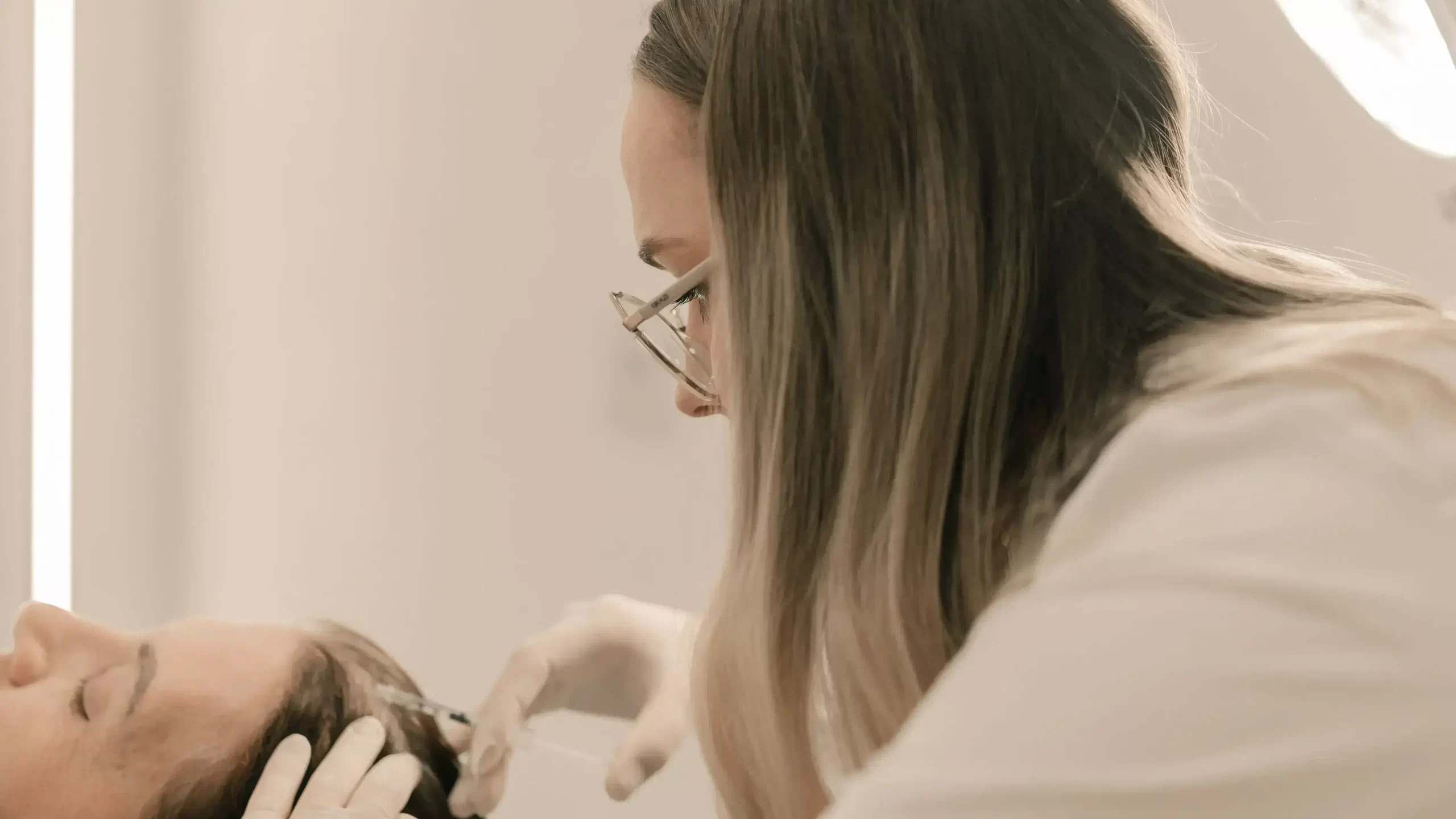
“Scalp treatment” can mean a lot of different things: an at-home routine for dandruff, a moisturizing product for dryness, or a professional service at a salon. This guide breaks down the most common scalp concerns, the at-home and professional treatment options available, and how to figure out which one actually fits what you're dealing with.
What Does “Scalp Treatment” Mean?
Scalp treatment is a broad term that can refer to targeted at-home products addressing a specific concern, like dandruff or dryness, or to professional services offered at a salon or spa, like scalp exfoliation or massage. The right treatment depends entirely on what's actually going on with your scalp, so it's worth identifying your specific concern before choosing a product or service.
Common Scalp Concerns That Prompt Treatment
- Dandruff and flaking, often linked to yeast overgrowth or dryness; see our related guide on dandruff treatment for a deeper breakdown
- An oily scalp, which can respond to different products than dryness does; see our related guide on managing oily hair
- Dry, tight, or itchy scalp, often from weather, harsh products, or over-washing
- Product buildup, from styling products, dry shampoo, or hard water
- Sensitivity or irritation, sometimes triggered by a new product or ingredient
- Scalp changes linked to hair thinning, which may call for a medical evaluation rather than cosmetic treatment alone
Talk to a Doctor
Get Answers to Your Health Questions
Connect with health professionals — anytime, from anywhere.
Talk to a Doctor
Get Answers to Your Health Questions
Connect with health professionals — anytime, from anywhere.
At-Home Scalp Treatment Options
Exfoliating Scalp Scrubs and Masks
Scalp scrubs and exfoliating masks are designed to lift away product buildup, excess oil, and dead skin cells. They can leave the scalp feeling cleaner and may support a healthier environment for hair growth, though they're generally considered a supportive, cosmetic step rather than a treatment for an underlying medical scalp condition. Using them too frequently or too aggressively can irritate the scalp, so moderation matters.
Medicated Shampoos
For dandruff, seborrheic dermatitis, or scalp psoriasis specifically, medicated shampoos containing ingredients like zinc pyrithione, ketoconazole, selenium sulfide, or salicylic acid are generally the most effective at-home option. Our related guide on dandruff treatment covers these ingredients and how to use them in more depth.
Scalp Moisturizers
For dry or tight-feeling scalps, a scalp-specific moisturizing treatment or lightweight oil, applied directly to the scalp rather than just the hair, can help restore comfort. Look for gentle, non-comedogenic formulas, since heavier oils applied too generously can sometimes contribute to buildup or irritation for some people. Pairing a moisturizing treatment with a gentler, sulfate-free shampoo tends to work better than the treatment alone.
Scalp Massage
Massaging the scalp, either by hand or with a massage tool, may support circulation and has some early research suggesting a modest benefit for hair thickness over time, discussed in more detail in our related guide on hair growth. It's a low-risk, relaxing addition to a routine, though it shouldn't be expected to resolve an underlying scalp condition on its own.
What Is a Scalp Treatment at a Salon?
Professional scalp treatments at salons and spas typically involve a deeper cleanse or exfoliation than a typical at-home wash, often combined with a scalp massage, steaming, and a specialized mask or serum left on for a period of time. Some salons also offer add-ons like LED light therapy or high-frequency devices marketed for scalp health. These services can feel genuinely relaxing and may leave the scalp looking and feeling cleaner, but it's worth knowing that most salon scalp treatments are cosmetic and relaxation-focused rather than clinically proven treatments for a diagnosed scalp condition or hair loss. They can be a reasonable complement to a solid at-home routine, but they generally aren't a substitute for a dermatologist's evaluation if you have a persistent scalp condition or are experiencing hair loss.
Choosing the Right Scalp Treatment for You
- Flaking or itching with visible scale: start with a medicated dandruff shampoo rather than a cosmetic scrub
- Ongoing dryness and tightness: a scalp moisturizer paired with a gentler shampoo
- Buildup from styling products or dry shampoo: an occasional clarifying shampoo or gentle exfoliating treatment
- General maintenance and relaxation: a salon scalp treatment can be a pleasant addition, though it isn't a treatment for an underlying condition
- Thinning hair or a receding hairline: this calls for a dermatologist's evaluation rather than cosmetic scalp treatments alone; see our related guide on baldness
When a Scalp Treatment Isn’t Enough
If your scalp concern persists despite consistent at-home care, involves significant redness, pain, or spreading irritation, or is accompanied by hair thinning or loss, it's worth seeing a dermatologist rather than continuing to try different products or services. A proper diagnosis makes it much easier to choose a treatment that's actually likely to help.
Frequently Asked Questions
What is the best treatment for your scalp?
There's no single best scalp treatment, since the right choice depends entirely on your specific concern. Flaking and itching generally respond best to a medicated shampoo targeting the underlying cause, dryness responds better to a moisturizing routine, and buildup responds to occasional gentle exfoliation. If you're not sure what's driving your symptoms, or if at-home care isn't helping, a dermatologist can help identify the cause and recommend a more targeted treatment.
What is a scalp treatment at a salon?
A salon scalp treatment typically involves a deeper cleanse or exfoliation than a regular wash, often combined with a scalp massage, steaming, and a specialized mask or serum. Some salons also offer additional services like LED light therapy. These treatments are generally relaxing and cosmetic in nature, and while they can complement a good at-home routine, they aren't a substitute for medical evaluation if you have a persistent scalp condition or are experiencing hair loss.
Conclusion
“Scalp treatment” covers a wide range of options, from targeted at-home products to professional salon services, and the right choice depends entirely on your specific concern. Matching the treatment to the actual issue, whether that's flaking, dryness, buildup, or general maintenance, tends to work better than reaching for a generic scalp product. If your symptoms persist or you're noticing hair thinning alongside them, a dermatologist can help identify the underlying cause and recommend a more targeted approach.
References
American Academy of Dermatology — Hair Care Guidance: https://www.aad.org/public/everyday-care/hair-scalp-care
DermNet — Seborrhoeic Dermatitis: Causes and Treatment: https://dermnetnz.org/topics/seborrhoeic-dermatitis
International Journal of Trichology — Hair Cosmetics: An Overview: https://pmc.ncbi.nlm.nih.gov/articles/PMC4387693/
Koyama T, et al. — Standardized Scalp Massage Results in Increased Hair Thickness (PMC, NIH): https://www.ncbi.nlm.nih.gov/pmc/articles/PMC4740347/