
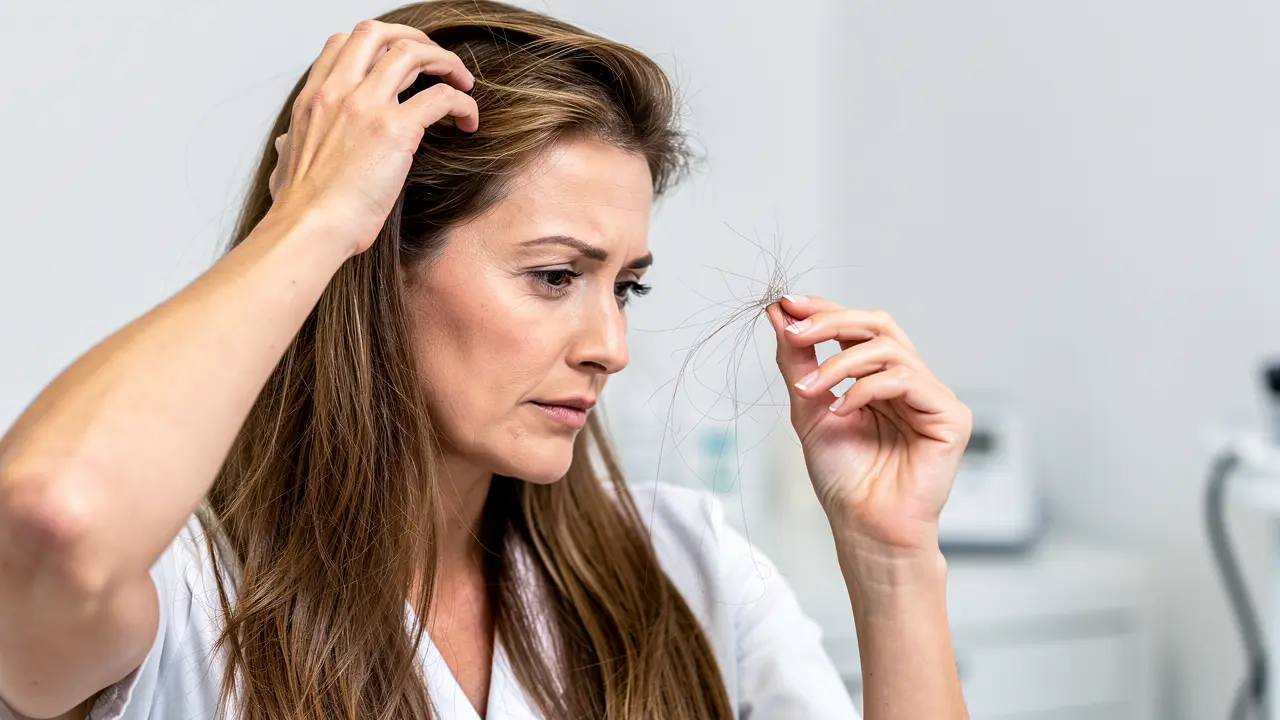
Finding extra strands on your pillow, in the shower drain, or on your hairbrush can be alarming, but some amount of hair shedding is a normal part of the hair growth cycle. This article explains what counts as typical hair shedding, the common causes behind excessive shedding, and practical, evidence-informed ways to manage it and support healthier hair and scalp.
What Is Hair Shedding?
Hair naturally cycles through growth, transition, and resting phases. At the end of the resting phase, called telogen, hair falls out to make room for new growth. Most people shed somewhere between 50 and 100 hairs a day as part of this ordinary cycle, so seeing loose strands is not automatically a cause for concern.
Shedding is different from pattern hair loss. Hair shedding refers to hair falling out, often diffusely, while pattern hair loss, also called androgenetic alopecia, involves a gradual reduction in hair density in a specific pattern. It is also distinct from alopecia areata, an autoimmune condition that causes hair to fall out in patches. When shedding becomes noticeably heavier than usual, it is often described clinically as telogen effluvium.
What Causes Excessive Hair Shedding?
Excessive shedding, or telogen effluvium, happens when a larger than usual proportion of hair follicles shift into the resting phase at the same time, leading to increased hair loss a few months later. Research suggests it can be triggered by a variety of physical or emotional stressors on the body.
Physical Stress and Illness
Significant physical stress, such as major surgery, high fever, a serious illness, or rapid weight loss, is commonly associated with increased shedding. Because hair growth responds slowly, shedding related to a stressful event often does not appear until roughly two to three months afterward, which can make the trigger easy to overlook.
Childbirth and Hormonal Changes
Many women notice increased shedding in the months following childbirth, sometimes called postpartum hair loss, as hormone levels shift back toward pre-pregnancy levels. Hormonal changes related to thyroid conditions, starting or stopping hormonal birth control, or menopause may also contribute to increased shedding in some individuals.
Nutritional Factors
Low iron levels, inadequate protein intake, and certain other nutrient deficiencies have been associated with increased hair shedding, since hair follicles are sensitive to the body's nutritional status. Crash dieting or very restrictive eating patterns may also play a role.
Medications and Other Triggers
Certain medications, including some used for blood pressure, mood, and seizure control, as well as retinoids and hormonal therapies, have been linked to increased shedding in some people. Emotional stress, chronic illness, and, in some cases, early stages of pattern hair loss can also present with noticeable shedding.
Talk to a Doctor
Get Answers to Your Health Questions
Connect with health professionals — anytime, from anywhere.
Talk to a Doctor
Get Answers to Your Health Questions
Connect with health professionals — anytime, from anywhere.
Common Symptoms
Hair shedding related to telogen effluvium usually presents as diffuse thinning across the scalp rather than complete bald patches. Common signs include:
- Noticeably more hair in the shower drain, on the pillow, or in a hairbrush
- A general decrease in ponytail thickness
- Hair loss that appears diffuse rather than confined to a specific spot
- Shedding that started roughly two to three months after an illness, stressful event, or major body change
This pattern is different from alopecia areata, which typically causes distinct, often round patches of hair loss, and from pattern hair loss, which tends to progress gradually over months to years in a consistent area such as the crown or hairline.
How Is the Cause of Hair Shedding Identified?
A healthcare professional or dermatologist can help determine whether shedding reflects a temporary, self-limiting process or an underlying condition that needs attention. Evaluation often includes a review of recent illnesses, medications, diet, and stressors, along with a scalp examination. Blood tests may be used to check for thyroid dysfunction, iron deficiency, or other nutritional gaps, and in some cases a gentle hair-pull test or scalp assessment can help estimate how much hair is in the shedding phase.
How to Manage Hair Shedding
In many cases, telogen effluvium resolves on its own within about three to six months once the underlying trigger has passed or been addressed. Management generally focuses on identifying and addressing contributing factors rather than a single fix.
Address the Underlying Trigger
Because shedding is often connected to an identifiable cause, working with a healthcare provider to manage conditions such as thyroid dysfunction, correct nutrient deficiencies like low iron, or review recent medication changes can be an important first step.
Support Nutrition and Overall Health
Adequate protein and iron intake, along with a generally balanced diet, may help support the hair growth cycle. A healthcare provider can advise on whether testing or supplementation is appropriate, since taking supplements without a confirmed deficiency is not generally recommended.
Topical Minoxidil
For some people with prolonged or chronic shedding, a healthcare provider may suggest topical minoxidil, which is approved for pattern hair loss and has also been studied as a way to support hair density during recovery from telogen effluvium. As with other treatments, it should be used under professional guidance, and results, when they occur, generally take several months to become noticeable.
Gentle Hair Care
Reducing tension on the scalp from tight hairstyles, minimizing heat styling, and using gentle hair care practices may help limit additional stress on hair that is already shedding, although these steps do not address the underlying trigger on their own.
Prevention and Lifestyle Considerations
While not every episode of shedding can be prevented, certain habits may help support overall hair health and reduce the likelihood of nutrition- or stress-related shedding:
- Eating a balanced diet with adequate protein, iron, and key vitamins and minerals
- Managing chronic stress through sleep, activity, and other supportive habits
- Avoiding very restrictive or rapid weight-loss diets when possible
- Discussing new medications or supplements with a healthcare provider if shedding develops after starting them
- Monitoring for shedding after major illness, surgery, or childbirth, and following up with a provider if it does not improve
When Should You See a Healthcare Professional?
It is a good idea to speak with a healthcare professional or dermatologist if shedding lasts longer than about six months, is accompanied by visible bald patches, scalp redness, pain, or itching, or occurs alongside other symptoms such as fatigue or unexplained weight changes, which can sometimes point to a thyroid condition. A professional evaluation can help distinguish ordinary shedding from pattern hair loss, alopecia areata, or another underlying condition that may benefit from targeted treatment.
Frequently Asked Questions
Why is my hair shedding so much?
Increased hair shedding is often associated with a physical or emotional stressor from a few months earlier, such as illness, surgery, childbirth, rapid weight loss, or a new medication. Nutritional factors like low iron and thyroid conditions may also contribute. In many cases the cause is temporary, but a healthcare provider can help identify the specific trigger, especially if shedding is heavy or prolonged.
How can I stop my hair shedding?
Management generally starts with identifying and addressing the underlying cause, such as correcting a nutrient deficiency, adjusting a medication with a healthcare provider, or allowing time for the body to recover after an illness or stressful event. For many people, shedding related to telogen effluvium improves on its own within three to six months. In cases of prolonged or chronic shedding, a healthcare provider may discuss options such as topical minoxidil, though this should only be used under professional guidance.
Conclusion
Some hair shedding is a normal part of the hair growth cycle, but a noticeable increase is often associated with an identifiable physical, hormonal, or nutritional trigger, and it is distinct from conditions like pattern hair loss or alopecia areata. Most cases of excessive shedding improve within several months once the underlying cause is addressed. Because persistent or unexplained shedding can sometimes signal an underlying health condition, checking in with a dermatologist or healthcare professional is the most reliable way to get an accurate diagnosis and a management plan suited to individual needs.
Doc Med Center provides health information for general educational purposes only. This content is not a substitute for professional medical advice, diagnosis, or treatment. Speak with a qualified healthcare professional about your individual health concerns.
REFERENCES
Cleveland Clinic - Hair Loss: Causes, Treatments and Prevention Options: https://my.clevelandclinic.org/health/diseases/21753-hair-loss
Cleveland Clinic Journal of Medicine - Shedding: How to Manage a Common Cause of Hair Loss: https://www.ccjm.org/content/ccjom/68/3/256.full.pdf