
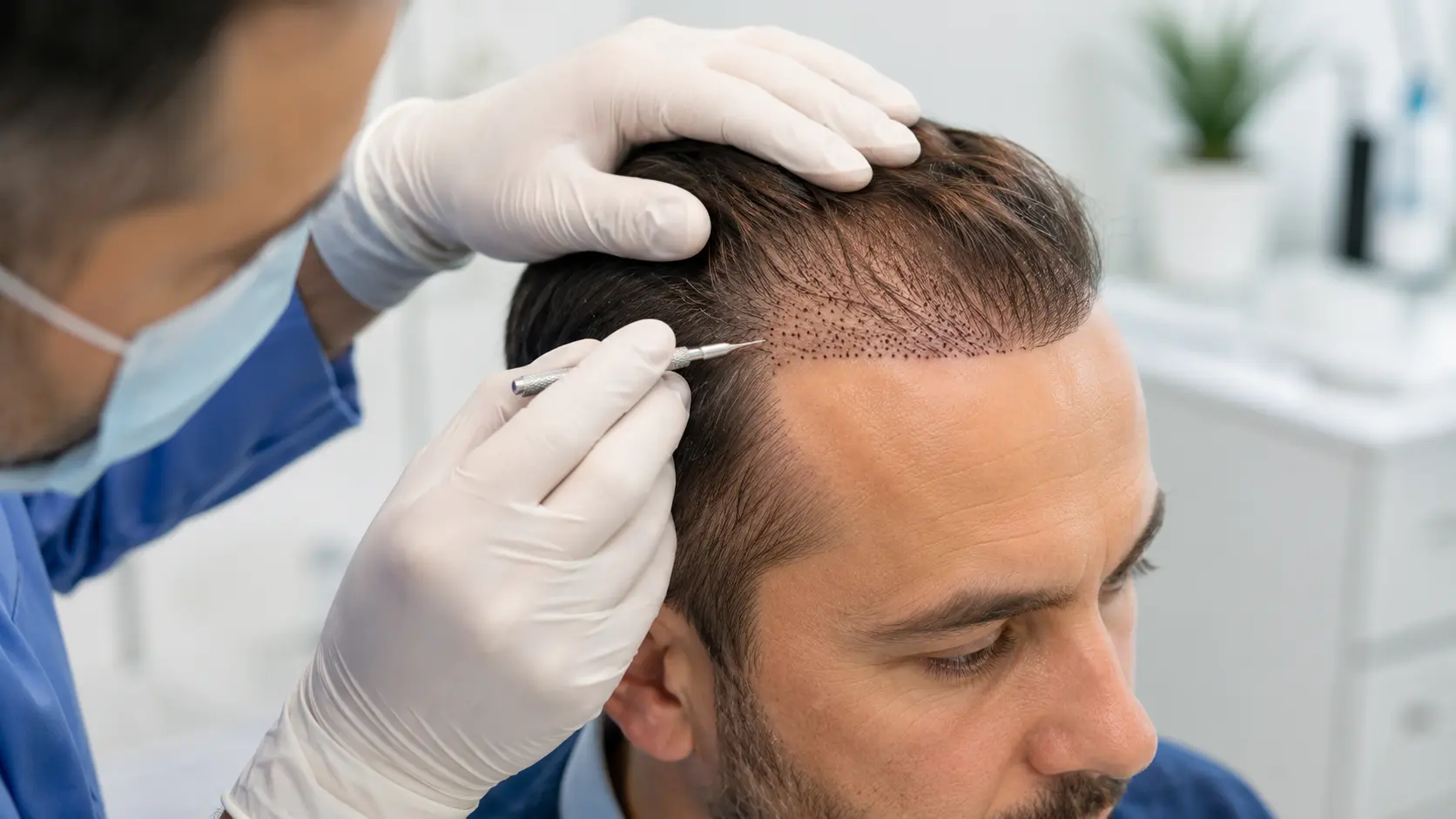
If you have come across the term “hair plugs” while researching hair loss solutions, you may be picturing an outdated procedure or wondering if it is the same thing as a modern hair transplant. The two are related, but they are not interchangeable. Hair plugs refer to an older hair restoration technique that has largely been phased out in favor of more refined methods. This article explains what hair plugs are, why they are rarely performed today, how they differ from current hair transplant options, and what to consider before pursuing any hair restoration procedure.
What Are Hair Plugs?
Hair plugs are an early form of hair transplantation that became popular in the mid-20th century. The technique involved using a circular punch tool to remove round sections of scalp, each containing a cluster of hair follicles, from a donor area, usually the back of the head. These plugs, often containing groups of follicles rather than individual units, were then inserted into bald or thinning areas.
Because each plug contained multiple follicles bundled tightly together, the results often grew in visible clusters. This could create an uneven, “tufted” appearance that some people describe as doll-like, since natural hair growth patterns are typically more randomized and finer in distribution.
Are Hair Plugs Still Used Today?
Reputable hair restoration clinics do not perform traditional hair plug procedures anymore. The technique has been replaced by more advanced surgical methods that produce more natural-looking results. However, the term “hair plugs” is still used informally, and people sometimes use it to refer to modern hair transplants even though the underlying procedures are quite different.
If someone mentions they are getting “hair plugs” today, they most likely mean a modern hair transplant procedure rather than the older technique.
Talk to a Doctor
Get Answers to Your Health Questions
Connect with health professionals — anytime, from anywhere.
Talk to a Doctor
Get Answers to Your Health Questions
Connect with health professionals — anytime, from anywhere.
Hair Plugs vs. Modern Hair Transplants
Understanding the differences between old-style hair plugs and current hair transplant techniques can help clarify what to expect from either approach.
Graft Size and Appearance
Traditional hair plugs used large grafts, sometimes containing 15 to 20 or more hairs in a single round unit. Modern techniques such as follicular unit extraction (FUE) and follicular unit transplantation (FUT) work with much smaller, naturally occurring groupings of one to four hairs. This finer approach allows surgeons to place grafts in a way that more closely mimics natural hair growth patterns.
Technique and Recovery
Hair plug procedures were often performed over multiple sessions spread across weeks. Modern hair transplant procedures are typically completed in a single extended session, often over several hours, using specialized tools for extraction and placement.
Scarring
The large punch tools used in older plug procedures could leave more noticeable scarring in the donor area. Modern FUE techniques use much smaller punches, which generally result in minimal, less noticeable scarring, though some scarring can still occur depending on the technique and individual healing.
- Hair plugs: large grafts, multi-session process, higher risk of visible scarring and unnatural clustering
- FUT: strip harvesting with dissection into smaller follicular units, natural-looking results, linear donor scar
- FUE: individual follicular unit extraction, minimal linear scarring, longer procedure time per graft
Why Hair Plugs Fell Out of Favor
Surgeons moved away from hair plugs primarily because of the aesthetic limitations of the technique. Grouping many follicles into a single large graft made it difficult to recreate the subtle density and directional growth of natural hair. As surgical tools and techniques advanced, particularly with the development of follicular unit-based methods, hair restoration specialists gained the ability to work with much smaller, more precise grafts. This shift allowed for more natural transitions between the hairline and the rest of the scalp, along with generally reduced scarring and improved patient satisfaction.
What If You Already Have Older Hair Plugs?
If you or someone you know previously underwent a traditional hair plug procedure and is unhappy with the results, options may still be available. Some hair restoration specialists offer repair procedures designed to soften the appearance of older plugs, which can involve redistributing existing grafts or adding finer grafts around the original area to create a more natural look. The suitability of a repair procedure depends on factors such as the condition of the donor area and the extent of the original work, so an evaluation from a qualified hair restoration specialist is an appropriate next step.
What to Know Before Considering Any Hair Restoration Procedure
Before pursuing a modern hair transplant, it can help to understand a few general considerations. This information is educational and not a substitute for a consultation with a healthcare professional or board-certified hair restoration specialist.
- Candidacy generally depends on having a stable, healthy donor area with sufficient hair density
- Hair transplant results are not guaranteed and can vary based on individual factors such as hair type, scalp condition, and the underlying cause of hair loss
- Recovery expectations, potential side effects, and realistic timelines should be discussed directly with the treating provider
- Cost, credentials of the surgical team, and clinic reputation are worth researching thoroughly before scheduling any procedure
- Ongoing hair loss unrelated to the transplanted area may still occur, since a transplant does not necessarily stop the progression of conditions like androgenetic alopecia
Non-Surgical Options Worth Understanding First
Surgical hair restoration is not the only avenue for people concerned about thinning hair. Depending on the cause and extent of hair loss, some people explore non-surgical approaches such as topical treatments, scalp care routines, or gentle formulations designed for thinning hair, before or alongside considering a surgical procedure. If you are exploring these options, our guide to the best shampoo for thinning hair covers ingredients and formulations that may support scalp health as part of a broader hair care routine.
Frequently Asked Questions
How long will hair plugs last?
When a traditional hair plug procedure was successful, the transplanted hair could grow long-term, since the follicles were typically taken from areas less prone to hair loss. However, “lasting” refers to hair growth, not to the appearance of the result. Even when the grafts survive, the visible outcome often remained tufted or unnatural, which is a primary reason the technique was set aside in favor of more refined methods.
What is a hair plug?
A hair plug is a round graft of scalp tissue, typically containing a cluster of hair follicles, that was surgically removed from a donor area and inserted into a bald or thinning area using an older hair transplant technique. The term is sometimes used today, somewhat inaccurately, to describe modern hair transplant procedures, even though current techniques use much smaller, more precisely placed grafts.
Conclusion
Hair plugs represent an early chapter in the history of hair restoration, one that modern techniques like FUE and FUT have largely replaced due to improvements in graft size, technique, and overall appearance. If you are researching hair restoration options, understanding this history can help clarify what to expect from today's procedures and what questions to bring to a consultation. Because outcomes depend on individual factors, speaking with a qualified healthcare professional or board-certified hair restoration specialist is the most reliable way to determine which approach, surgical or non-surgical, may be appropriate for your situation.
Doc Med Center provides health information for general educational purposes only. This content is not a substitute for professional medical advice, diagnosis, or treatment. Speak with a qualified healthcare professional about your individual health concerns.
References
WebMD — Hair Transplant Procedures: What to Expect. https://www.webmd.com/skin-problems-and-treatments/hair-loss/hair-transplants
International Society of Hair Restoration Surgery — Follicular Unit Transplantation & Extraction. https://ishrs.org/follicular-unit-transplantation-extraction/
PubMed — Follicular Unit Extraction: Minimally Invasive Surgery for Hair Transplantation. https://pubmed.ncbi.nlm.nih.gov/12174065/
PMC/NCBI — Follicular Unit Extraction Hair Transplant Technique Overview. https://www.ncbi.nlm.nih.gov/pmc/articles/PMC2956961/