
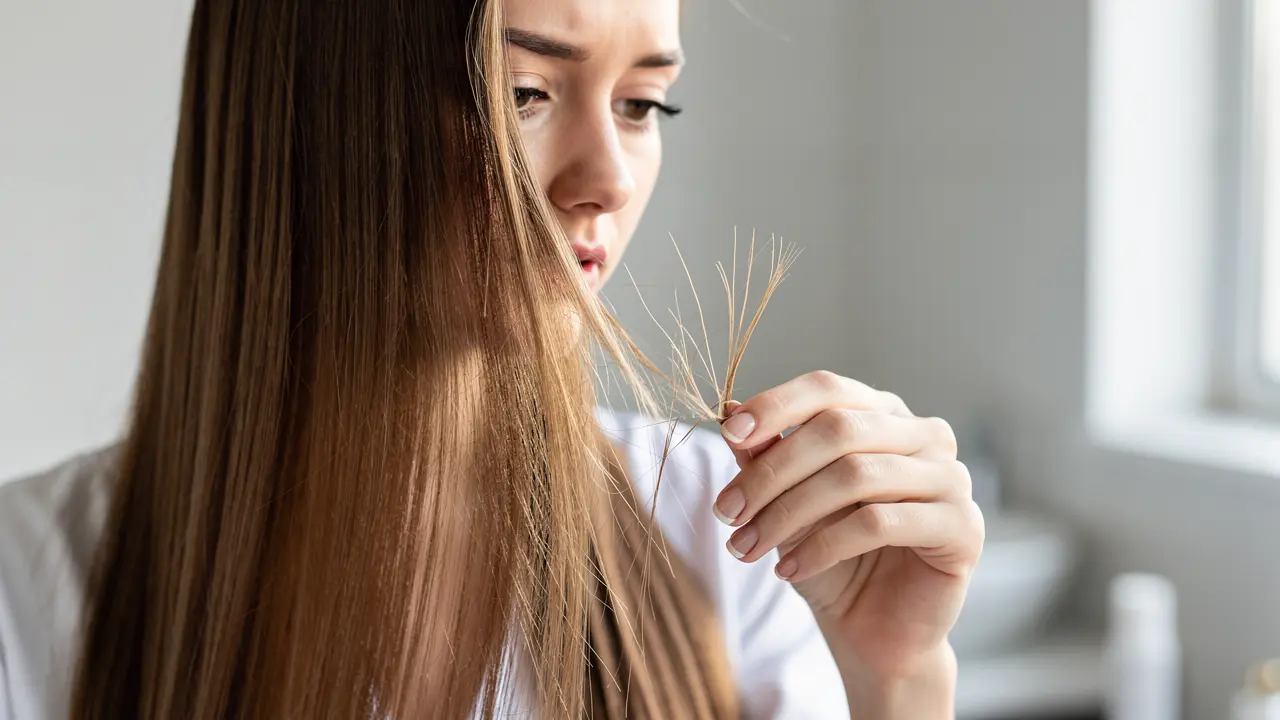
Finding short, snapped strands, split ends, or hair that never seems to grow past a certain length usually points to hair breakage rather than hair loss from the root. It is a common concern, and in most cases it responds well to changes in hair care habits. This guide explains what causes hair breakage, how to tell it apart from shedding or hair loss, and practical, evidence-informed ways to manage and reduce it.
What Is Hair Breakage?
Hair breakage happens when the hair shaft itself fractures or snaps somewhere along its length, rather than the whole strand falling out from the follicle. Hair is made mostly of a protein called keratin, protected by an outer layer known as the cuticle. When the cuticle is repeatedly stressed by heat, chemicals, or friction, it can lift or wear away, leaving the inner part of the strand exposed and more likely to snap. Once a hair has broken, that particular strand cannot repair itself. Prevention and consistent care are what make the biggest difference going forward.
Breakage Versus Hair Loss or Shedding
It can be easy to confuse breakage with hair loss, but they are different problems with different management.
- Breakage produces short, blunt, or frayed pieces at varying lengths along the hair shaft, often concentrated in one area, such as where a ponytail sits or along the hairline.
- Shedding involves a full strand, including the root, coming out, often with a small white bulb at the end; losing roughly 50 to 100 hairs a day this way is considered typical.
- Hair loss conditions such as androgenetic alopecia or alopecia areata affect the follicle itself and can reduce the total number of hairs growing, rather than simply damaging the hair shaft.
If you are unsure which of these you are experiencing, or if you notice thinning at the roots or bald patches rather than just damaged ends, a dermatologist can help clarify the underlying issue.
What Causes Hair Breakage?
Heat and Styling Damage
Blow dryers, flat irons, and curling tools can dry out the hair shaft and weaken the cuticle when used frequently or at high temperatures, making strands more prone to snapping. Using tools on soaking wet hair or setting them at very high heat tends to increase this risk. A heat protectant product and lower tool temperatures may help reduce damage when heat styling is used regularly.
Chemical Treatments
Bleaching, permanent hair color, relaxers, and chemical straightening treatments alter the internal structure of the hair shaft and can leave it more fragile, particularly with repeated or overlapping applications. Spacing out chemical treatments and avoiding layering multiple harsh processes close together may help limit cumulative damage.
Mechanical and Friction-Related Causes
Rough towel-drying, aggressive brushing or combing (especially of wet hair), tight hairstyles, tight elastics, and hair extensions can all place physical stress on the hair shaft. Consistent, prolonged tension can also affect the follicle over time and contribute to a related but distinct condition called traction alopecia, so it is worth varying hairstyles and easing tension where possible.
Moisture and Protein Imbalance
Hair that is too dry can become brittle, while hair that has too much protein relative to moisture can feel stiff and also break more easily. Regular conditioning, along with occasional protein treatments for hair that tends to run dry or over-processed, is a commonly recommended way to help keep this balance in check, though the right routine varies by hair type and porosity.
Underlying Health Conditions
Less commonly, ongoing hair breakage is linked to a health issue rather than styling habits alone. Hypothyroidism, certain nutritional deficiencies, and inherited or acquired hair shaft disorders, such as trichorrhexis nodosa, can all make hair more prone to breaking. Hair breakage can also occur alongside alopecia areata, an autoimmune condition, particularly during active phases of the disease. If breakage does not improve with gentler hair care, an underlying cause may need to be ruled out.
Talk to a Doctor
Get Answers to Your Health Questions
Connect with health professionals — anytime, from anywhere.
Talk to a Doctor
Get Answers to Your Health Questions
Connect with health professionals — anytime, from anywhere.
Common Symptoms of Hair Breakage
- Short, uneven strands or split ends, especially near the same recurring spots
- Rough, frizzy, or straw-like texture
- Hair that seems unable to grow past a certain length
- Small white dots (split ends) or frayed tips along the hair shaft
- Increased tangling or knots
Risk Factors
- Frequent heat styling or chemical treatments, especially when combined
- Tightly coiled or curly hair textures, which can have naturally drier, more fragile strands
- Tight hairstyles, extensions, or hair elastics used often
- Dry or humid climates, and frequent sun or chlorine exposure
- Underlying conditions such as thyroid disorders or nutritional deficiencies
How Is Hair Breakage Diagnosed?
Hair breakage is usually identified through a visual and tactile examination of the hair and scalp, sometimes with a handheld magnifying device called a trichoscope, which can reveal split ends, uneven shaft thickness, or signs of a hair shaft disorder. A dermatologist or trichologist will typically also ask about hair care habits, recent chemical treatments, diet, and any other symptoms. If an underlying medical cause is suspected, blood tests to check thyroid function, iron levels, or other nutrients may be recommended.
How to Manage and Reduce Hair Breakage
Everyday Hair Care Habits
- Detangle gently, starting from the ends and working upward, ideally with a wide-tooth comb
- Reduce heat styling frequency and use a heat protectant when tools are used
- Space out chemical treatments and avoid combining multiple harsh processes close together
- Choose looser hairstyles and rotate where elastics or clips sit to reduce repeated tension
- Pat hair dry with a soft towel or T-shirt rather than rubbing vigorously
Repairing Products That May Help
Regular conditioning helps replace lost moisture and smooth the cuticle, which can reduce friction and make strands feel stronger. For hair that is dry or chemically treated, an occasional deep conditioning or protein treatment may help reinforce the hair shaft, though overusing protein treatments on hair that does not need them can also contribute to stiffness and breakage. Because hair type and needs vary widely, a stylist or trichologist can help tailor a routine rather than relying on trial and error.
When Professional Treatment May Help
If breakage is severe, widespread, or not improving with gentler hair care, a dermatologist may recommend further evaluation. Depending on the findings, options such as prescription treatments, in-office therapies, or hair loss medications may be considered, but these are chosen based on the underlying cause rather than applied generally to all breakage.
Prevention Tips
- Get regular trims to remove split ends before they travel further up the strand
- Sleep on a silk or satin pillowcase, or use a satin hair wrap, to reduce nighttime friction
- Maintain a balanced diet with adequate protein, iron, and other nutrients associated with hair health
- Introduce new products or treatments one at a time so it is easier to identify what is and is not working
- Protect hair from prolonged sun, chlorine, or salt water exposure when possible
When Should You See a Healthcare Professional?
Consider seeing a dermatologist if breakage is severe, does not improve after a couple of months of gentler hair care, or is accompanied by scalp redness, itching, or scaling. It is also worth seeking an evaluation if you notice thinning at the roots, bald patches, or hair loss along with other symptoms such as fatigue, since these may point to an underlying cause that needs medical attention rather than hair-care damage alone.
Frequently Asked Questions
How do I stop breakage of hair?
Reducing hair breakage generally starts with limiting the stress placed on the hair shaft: cutting back on heat styling and harsh chemical treatments, detangling gently, avoiding tight hairstyles, and keeping hair adequately moisturized and conditioned. Since a broken strand cannot repair itself, the main goal is prevention going forward, along with regular trims to remove already-damaged ends. If breakage continues despite these changes, a dermatologist can help identify whether an underlying cause is contributing.
What is the biggest cause of hair breakage?
There is no single cause for everyone, but repeated heat styling and chemical treatments, such as bleaching, coloring, or relaxing, are among the most commonly cited contributors, especially when combined or used frequently. Mechanical stress from tight hairstyles, rough detangling, and friction also play a major role for many people. Identifying which of these applies most to your own routine is usually the most useful step toward reducing breakage.
Conclusion
Hair breakage is a common and usually manageable issue that happens when the hair shaft is weakened by heat, chemical treatments, friction, or dryness, and less often by an underlying health condition. Because a broken strand cannot heal itself, the most effective approach focuses on prevention: gentler handling, balanced moisture and protein care, and reduced use of harsh styling or chemical processes. If breakage is severe or does not improve with these changes, a dermatologist or trichologist can help identify whether an underlying cause needs to be addressed.
Doc Med Center provides health information for general educational purposes only. This content is not a substitute for professional medical advice, diagnosis, or treatment. Speak with a qualified healthcare professional about your individual health concerns.
References
American Academy of Dermatology — Hair Care Guidance: https://www.aad.org/public/everyday-care/hair-scalp-care
Johns Hopkins Medicine / ScienceDaily — Safe Hair Care Spares Hair, Dermatologists Report: https://www.sciencedaily.com/releases/2016/11/161128111607.htm
PubMed — Hair Loss Myths (evidence review of common hair care and treatment claims): https://pubmed.ncbi.nlm.nih.gov/28697221/